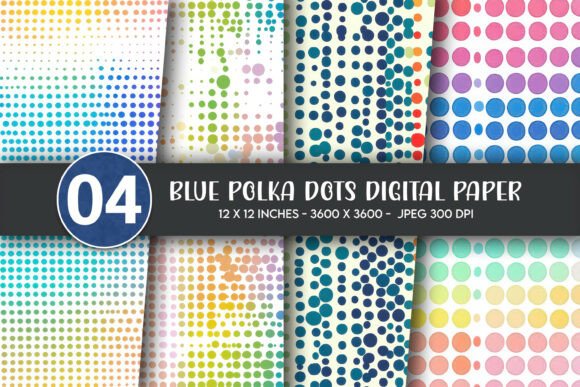
Multicolor Polka Dots Digital Paper
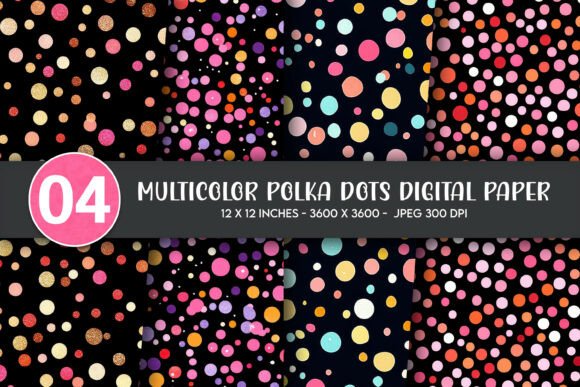
If you’ve ever scrolled through a design marketplace and paused at a pattern that feels both playful and polished—like confetti caught mid-air, or a candy store viewed through a kaleidoscope—you’ve probably sensed the quiet power of Multicolor Polka Dots Digital Paper. It’s not just another background. It’s a visual rhythm: evenly spaced, softly textured dots in saturated yet harmonious hues—think coral, cobalt, mustard, mint, and plum—arranged with precision against a clean white or off-white base. There’s no visual fatigue here. The spacing is generous, the contrast balanced, and the color palette curated to energize without overwhelming.
Why This Pattern Works Where Others Fade
Digital paper isn’t just filler—it’s functional texture. And Multicolor Polka Dots Digital Paper stands out because it bridges intention and accessibility. Unlike tightly packed dot patterns that read as noise, or monochrome versions that feel flat, this design carries personality while staying legible underneath text, icons, or layered graphics. That 3600x3600 pixel resolution at 300 DPI means it scales cleanly from a 4” sticker to a 24” wall art print—no pixelation, no muddy edges. You’re not guessing whether it’ll hold up on a mug wrap or a fabric-printed tote bag. You know it will.
This isn’t decorative clutter. It’s a considered design asset—calibrated for real use cases. A blogger drops it behind a quote graphic for Instagram, and suddenly their feed gains warmth and cohesion. A small-batch apparel brand uses it as a lining motif inside a onesie tag, reinforcing brand playfulness before the customer even wears it. An indie stationery maker prints it onto greeting cards, then embosses the front—so the dots subtly lift under light, adding tactile depth without extra cost.
Where It Fits Naturally (and Where It Doesn’t)
Multicolor Polka Dots Digital Paper thrives where energy, approachability, and clarity matter. Think children’s book interiors, boutique packaging inserts, event invitations for baby showers or creative retreats, or social media banners for makers’ markets. It pairs especially well with clean sans serif typefaces—like Montserrat or Poppins—for headlines, letting the dots provide warmth while the type delivers structure. With serif body text (e.g., Lora or Merriweather), it adds levity to editorial layouts without undermining readability.
It’s less suited for corporate annual reports or luxury skincare branding—contexts where restraint or monochromatic minimalism signals authority or exclusivity. But within its lane? It performs with quiet confidence. One educator used it as a subtle background for printable classroom reward charts—students responded more enthusiastically than with plain templates, not because the dots were “fun,” but because the consistency of spacing and color created visual calm amid activity.
Practical Use Across Your Projects
You get four high-quality JPG files—each identical in resolution and composition, but varying slightly in tone balance (warmer, cooler, brighter, softer). That’s intentional. Lighting, substrate, and adjacent colors change how a pattern reads. Printing on natural cotton canvas pulls out the earthier tones; a glossy mug finish makes the blues pop. Having options means you can match context—not guess.
- Wall decor & posters: Print full-bleed at 24x24” or scale down to 8x10” with a thin white border—works equally well framed or pinned directly to a bulletin board.
- T-shirts & onesies: Works best when printed as an all-over pattern or as a pocket-sized motif. Avoid placing over seams or curved areas unless your printer confirms alignment tolerance.
- Stickers & greeting cards: The crisp 300 DPI ensures clean die-cut edges and smooth ink coverage—even on matte vinyl or uncoated cardstock.
- Mugs & tote bags: Because the pattern repeats seamlessly (within the square dimensions), it wraps smoothly around cylindrical or rectangular surfaces without visible joins.
Licensing, Legibility, and Real-World Testing
This is a commercial-use digital download—no attribution required, no per-project fees. You can use it across client work, Etsy listings, Canva templates, or Shopify product mockups. Just remember: it’s a background element, not a standalone logo or icon. Its strength lies in supporting—not competing with—your primary message.
Before finalizing any print run, test legibility. Overlay sample body copy at 10–12 pt size using your intended font and color. If text starts to vibrate or blur at the dot boundaries, lighten the background opacity by 5–10% or switch to a higher-contrast text color (e.g., charcoal instead of dark gray). One craft supply seller discovered that printing the pattern on kraft paper muted the vibrancy too much—so they switched to bright white cardstock and added a spot-gloss varnish over the dots alone. Result? Tactile interest + color fidelity.
Designing With Intention, Not Just Decoration
Great pattern use isn’t about filling space—it’s about shaping perception. Multicolor Polka Dots Digital Paper communicates optimism without shouting, creativity without chaos, and inclusivity without cliché. It doesn’t try to be everything. It does one thing very well: offer consistent, scalable, joyful texture that supports human-centered design choices.
Whether you’re building a cohesive brand identity for a new podcast, refreshing your Etsy shop banners, or prepping assets for a school fundraiser, this digital paper earns its place in your toolkit—not because it’s trendy, but because it solves problems quietly: improving visual hierarchy, reinforcing brand voice, and making everyday items feel thoughtfully made.
No physical item ships. What you receive is immediate, reliable, and ready—four high-resolution JPG files, each 3600x3600 pixels, 300 DPI, designed to work where you need them most.